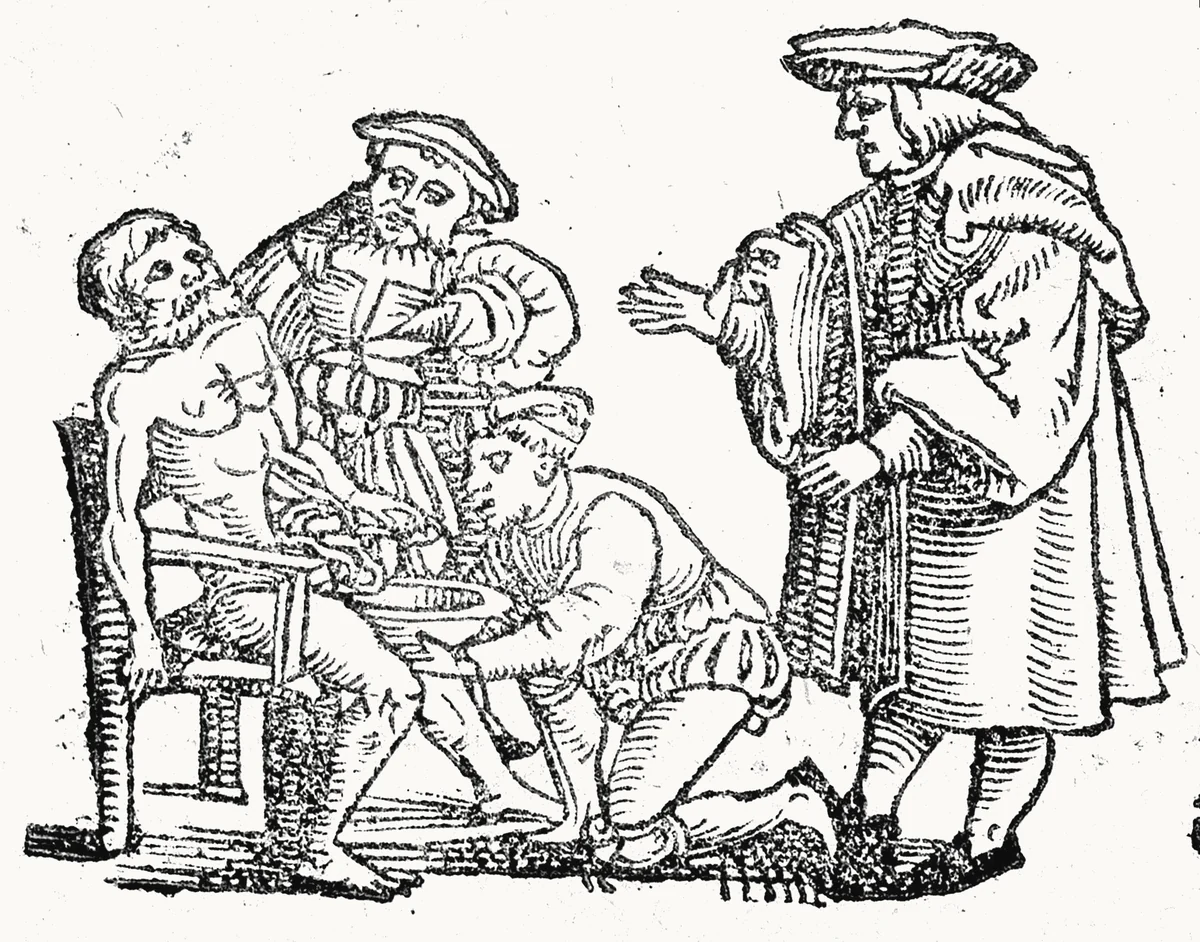
In 1828 a Paris physician named Pierre Charles Alexandre Louis took 77 patients with well-characterized pneumonia and sorted them by when they had been bled. Forty-one were bled early, on days one to four. Thirty-six were bled late, days five to nine. Then he compared what happened.
Forty-four percent of the early group died. Twenty-five percent of the late group died.
The early group's illness also ran about three days shorter.
Hold those two findings next to each other, because they are the whole problem in one line. The patients who got the treatment sooner got better faster and died more often. Louis called his own results "startling and apparently absurd," which is the most honest sentence anyone had produced on the subject in centuries.
Then he concluded that bloodletting's utility had, in his phrase, "narrow limits."
Narrow. Not none. The first man to seriously count kept bleeding people. He had the table in front of him, in his own handwriting, and what he took from it was that the thing needed to be done more carefully.
A Note On What This Study Is Not
Louis did not run a trial. There was no randomization and no blinding, and the two groups are defined by when somebody happened to open a vein, which means sicker patients could easily have been bled sooner. His numbers show that the early-bled group died more often. They do not establish that the bleeding did the killing.
He was also not the first person to count anything. A military trial by Alexander Lesassier Hamilton around 1809 came earlier. The pattern is not that nobody ever checked. The pattern is that checking did not change what anybody did.
The Case Everybody Cites
Now let me take something away from you.
You have heard that George Washington's doctors drained around forty percent of his blood and that this is what killed him. I believed it too. It does not survive the documents.
Washington fell ill on 13 December 1799 after riding in wet weather and died between ten and eleven at night on the 14th. He was bled four times. Mount Vernon records that the first bleeding, by an overseer named Rawlins, took a half-pint, and that "a total of thirty-two ounces of blood was extracted during the last bleeding." The middle two were never written down.
A 2021 review in Clinical Infectious Diseases puts it plainly:
Based on the Lear and Craik/Dick documents, all we know for certain is that something more than 44 to 46 oz of blood was taken from Washington in 4 separate bleedings during his final illness.
So: a documented minimum somewhere past 44 ounces, two bleedings unrecorded, and the popular forty-percent figure is not in the sources. The review also disputes the higher claims of 80 and 124 ounces, partly on a detail rather than a document. After the final bleeding Washington sat up for roughly half an hour without fainting, which is not what a man does after losing a third of his blood.
What The Records Do Not Contain
The duller version is worse.
Across about thirty hours, three physicians and one overseer bled him four times, raised a blister on his throat, gave him molasses, butter and vinegar to swallow, had him gargle vinegar and sage tea, administered an enema, attempted an emetic, and applied blisters and poultices to his feet and legs. Nine separate interventions.
And then this, from the same review:
However, neither they nor Lear indicate that the examination included an inspection of the President's throat.
That sentence is doing something careful and I am going to be careful with it too. It does not say nobody looked. It says nobody wrote down that they looked. The paper's own next move is conditional: if the throat was not examined, the physicians would have been guilty of "an egregious oversight."
The review declines to settle the diagnosis. Acute epiglottitis "remains a strong possibility," and a staphylococcal retropharyngeal abscess "has to be considered an equally strong possibility." Either way, its conclusion is that examining the throat early and incising a bulging retropharynx "might have relieved his dyspnea if not have saved his life."
Attending: 3 physicians, 1 overseer. Bleedings: 4. Documented volume: more than 44 to 46 oz. Bleedings recorded: 2 of 4. Other interventions: 5. Throat examinations recorded: 0. No further action was required of anyone.
That last line is the one. Not an accusation. A filing problem. The most famous deathbed in American history and the notes have a hole in them exactly where the throat should be.
Equipment, Approved
The apparatus tells you how ordinary this all was.
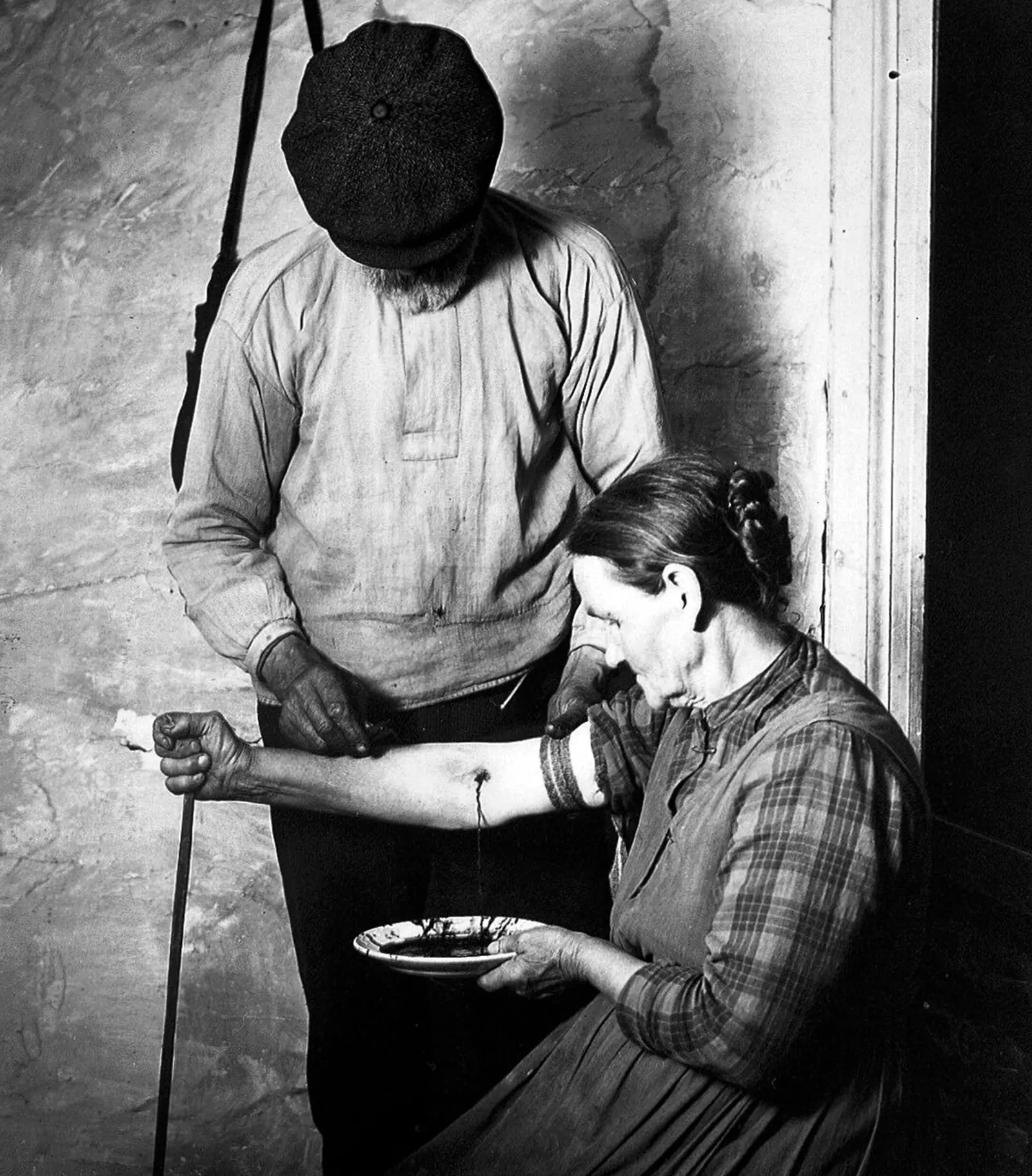
Bleeding was routine, seasonal, sometimes preventive, and there was an industry behind it. By the early nineteenth century the European leech trade was an obsession, with millions of animals moving through commerce and a recognized occupation of leech collector, which involved wading into a pond and using your own legs as bait. There was a job where the job was to be bitten.
A physician's kit held a lancet for opening a vein, a scarificator with spring-loaded blades for many small cuts at once, and a bowl with graduated markings, because the volume mattered and was written down.
They were measuring meticulously. They were measuring the wrong quantity.
And We Still Do This
Nobody in this story was stupid. Louis was one of the most rigorous men in European medicine and he counted, correctly, and then kept going. Washington's physicians were the best available and they intervened nine times. The failure was not ignorance. It was that the evidence arrived and lost the argument to what everyone already did.
That is the part that transfers. I have kept taking something for two years on the strength of a mechanism that sounded right, and I am aware that no table exists. Being shown the number is not the same as changing.
The medical journal The Lancet is still called that. Nobody has brought it up.
Sources
- Pierre Charles Alexandre Louis, Recherches sur les effets de la saignée (article 1828, book 1835, English translation 1836), via the James Lind Library, for the 77 patients, the 41 and 36 groups, the 44 and 25 percent mortality figures, the three-day difference in duration, and both quoted phrases. The study is observational, not a trial.
- Alexander Lesassier Hamilton's military trial, c. 1809, as an earlier attempt to compare outcomes.
- George Washington's Mount Vernon, The Death of George Washington, for the timeline, the four bleedings, the half-pint first bleeding, the thirty-two ounces "during the last bleeding," the attending physicians and the other treatments.
- Clinical Infectious Diseases (2021), "George Washington's Recurrent Health Problems and Fatal Infection Re-examined," for the quoted documented minimum, the disputed higher figures, the half hour without fainting, the quoted sentence about the throat, and the two diagnoses held as equally strong possibilities.
- The Old Operating Theatre Museum, on the nineteenth-century leech trade and the occupation of leech collector.