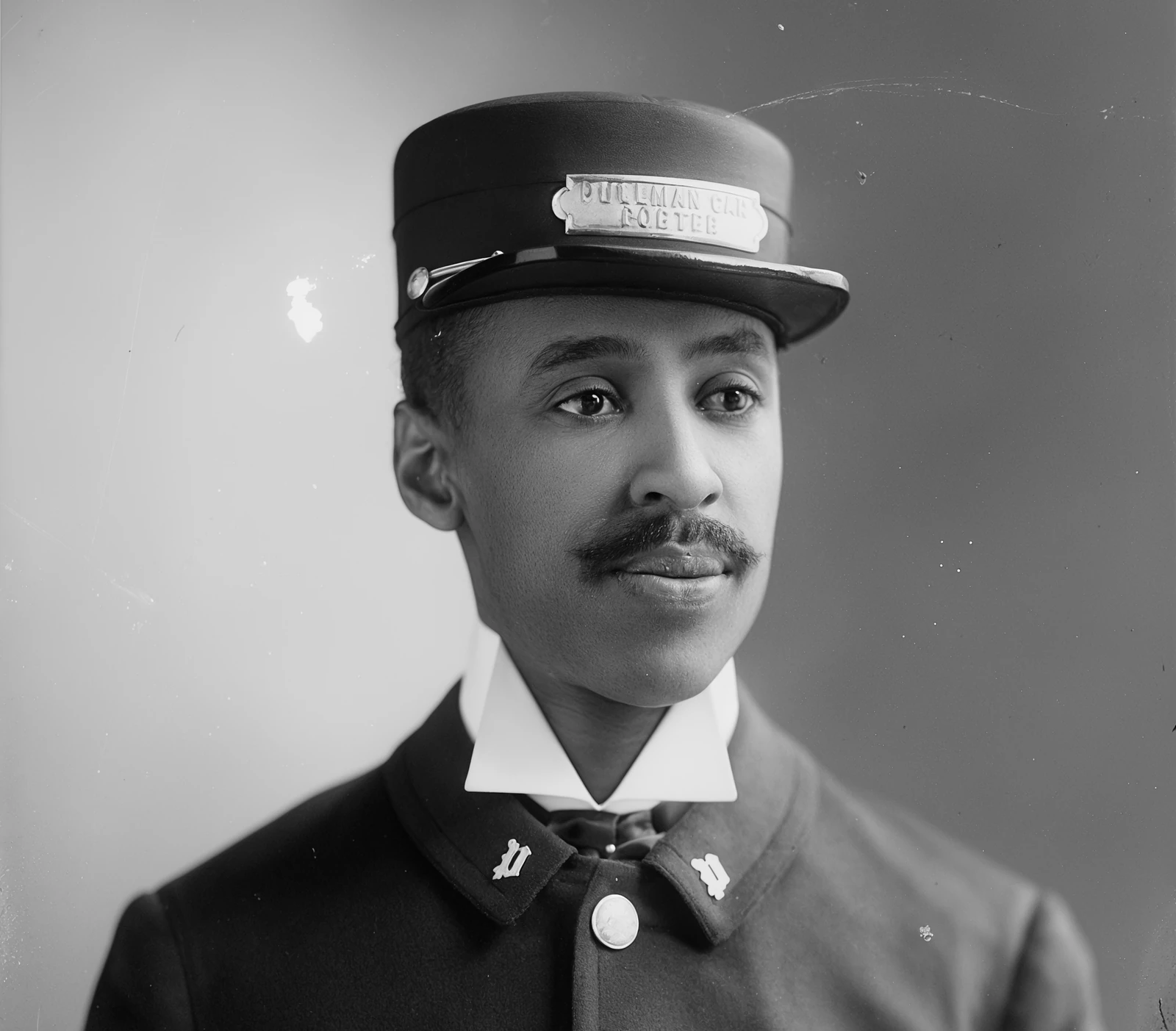
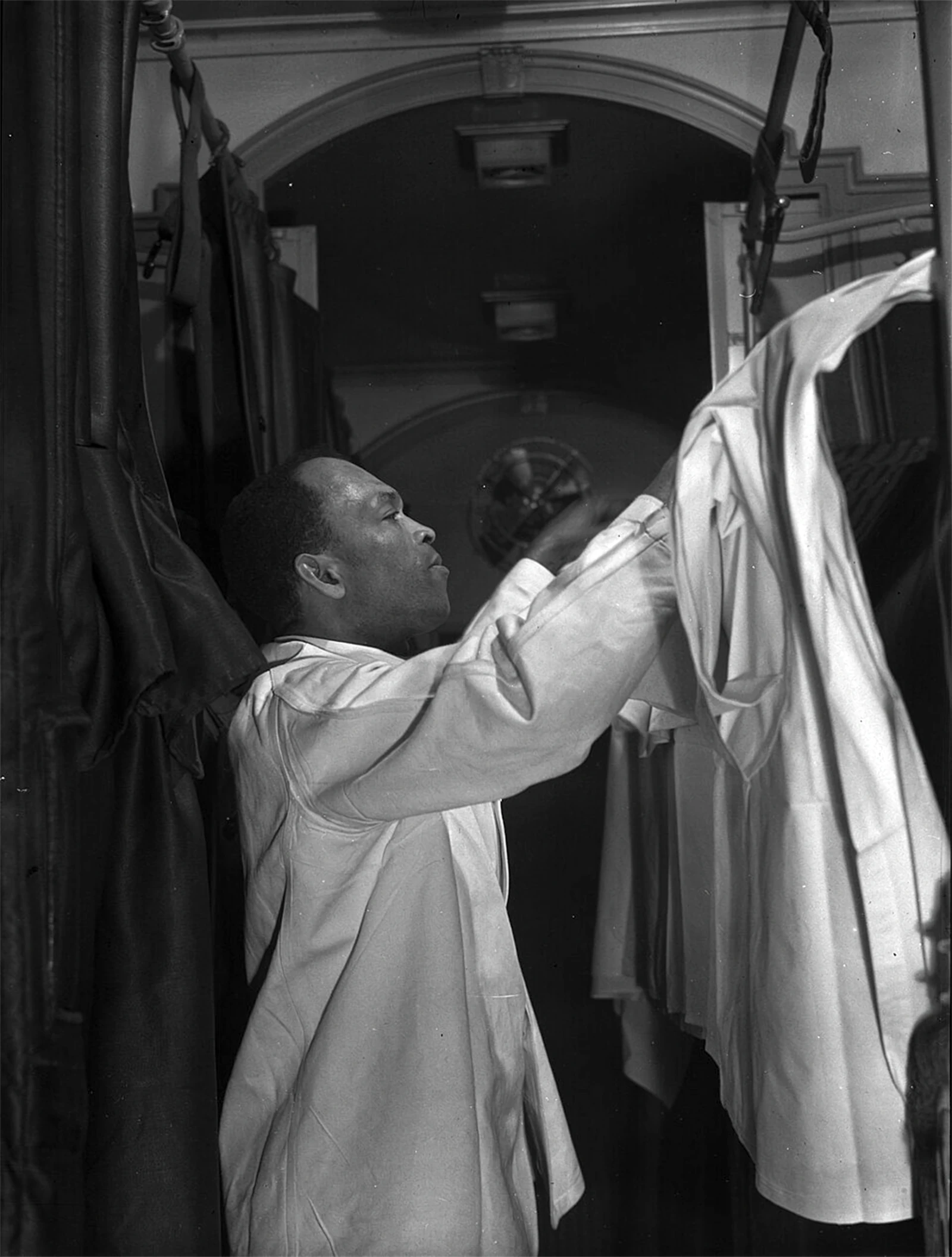
In 1927 the Pullman Company paid a sleeping car porter $72.50 a month. To collect it he had to work around 400 hours, or cover 11,000 miles, whichever the company got to first. The hours he spent preparing the car before the train moved were not paid, on the reasoning that the train was not moving. Everything above $72.50 came from whatever the passengers felt like handing him.
The passengers, famously, were rich and in no hurry.
Pullman was, for a long stretch of the twentieth century, the largest single employer of Black men in the United States, and its compensation plan had a hole in it shaped exactly like a tip.
Tipping was not invented in America and it was not invented to underpay anybody. It became American for that, adopted by employers who had just been handed a workforce with nowhere else to go, and in 1966 Congress wrote the arrangement down and signed it. Every argument you have ever had with yourself over a receipt is downstream of a public law number.
Briefly, America Said No
The custom came back from Europe with Americans who had watched it done there, and the reception at home was hostile in a way that is now difficult to picture. It was attacked as aristocratic. It was attacked as a bribe. It was attacked at book length in 1916 by William R. Scott, in The Itching Palm:
Every tip given in the United States is a blow at our experiment in democracy.
Scott was not a crank shouting from the edge of the debate. He was the debate, and he had a publisher. Six states had already outlawed the practice, and in 1915 Iowa, South Carolina and Tennessee joined Washington, Mississippi and Arkansas in legislating against it. Georgia followed.
For about ten years it was genuinely possible that this country would simply not do this. We got close. We have not been close since.
By 1926 every one of those laws was gone. They were close to unenforceable, and nobody holding a check wanted them enforced.
The Reformers Were Also Terrible
Here is where the tidy version of this story falls over.
A large share of the case against tipping was itself racist. The objection was frequently not that the practice degraded workers. It was that it degraded the wrong workers. Scott, who wrote the sentence about democracy above, also wrote this about who he thought was doing the degrading:
The Negro was servile by law and inheritance. The modern tip-taker voluntarily assumes, in a republic where he is actually and theoretically equal to all other citizens, a servile attitude for a fee.
Read it twice. The complaint is not that people are being treated as servants. The complaint is that people who were not supposed to be servants have started acting like the people who were.
So the anti-tipping movement and the Pullman Company disagreed about almost everything and agreed about the important part. One of them wanted to stop paying people. The other wanted to stop paying a specific kind of person a compliment. Both got most of what they wanted.
Scott also wrote, in the same book, that "unless a waiter can be a gentleman, democracy is a failure." Both sentences are his. People are not tidy, and neither are movements.
Equipment, Approved
Then the law arrived and made it permanent, in three moves.
1938. The Fair Labor Standards Act creates a federal minimum wage and does not cover restaurant and hotel workers, who are simply outside it. There is no subminimum wage for tipped workers because there is no minimum wage for tipped workers. You cannot go below a floor that was never poured.
1966. Public Law 89-601 extends coverage to service industries for the first time, and in the same stroke invents the tip credit: an employer may count a worker's tips toward the minimum wage, up to half of it. The sentence that brought restaurant workers inside the law is the sentence that let their employers stop paying half of it. Same act. Congress is remarkably efficient when it wants to be.
1991. The minimum wage reaches $4.25 on April 1. The tip credit is running at 50 percent. Half of $4.25 is $2.125, so the cash wage an employer owes a tipped worker lands at $2.13 an hour, as arithmetic rather than as a decision.
1996. Public Law 104-188 stops doing the arithmetic and writes the answer down. The cash wage is now $2.13 the way a street is named $2.13, cut loose from the minimum wage entirely.
Federal tipped cash wage: $2.13/hour. Set: April 1991. Frozen in dollars: 1996. Last changed: never. Federal minimum wage: $7.25/hour, since July 2009. Maximum tip credit: $5.12/hour. Employer's share as designed: 50 percent. Employer's share today: 29.4 percent. No further action required.
The wage is older than the law that froze it. It has outlived the arithmetic that produced it by thirty-five years and counting, which is a long career for a rounding decision.
Nobody voted to cut the employer's share below half. They wrote it down in dollars and let time do the voting. The federal minimum wage has gone up five times since 1991. The other number stayed exactly where it was, like furniture.
Currently Being Argued About
Seven states have long required the full minimum wage with no tip credit at all: Alaska, California, Minnesota, Montana, Nevada, Oregon and Washington. They still have restaurants, which is the only part of the experiment that has had decades to run. Washington DC is the live fight, where the Economic Policy Institute reports full-service restaurant employment up 7.9 percent since Initiative 82 and the industry-funded Employment Policies Institute reports millions in lost earnings, and you should check which institute you are reading before you quote either one. What nobody disputes: poverty among DC tipped workers runs at 7.7 percent against 2.6 percent for everybody else.
And We Still Do This
We argue about twenty percent in front of the person, about money a company decided not to pay, and we hold the argument with her instead of with it.
I have done this. I have sat at a table doing long division on a receipt while the woman who brought the food stood four feet away, waiting to find out what I had concluded she was worth. I was annoyed. Not at the restaurant. At the receipt, which had nothing to do with any of it.
That is the elegant part of the design. The tip moved the payroll decision onto the customer, and then it moved the resentment there too. Two jobs, one line item, no charge.
Nobody who built this was confused about what they were building. That is the part that should worry you.
In 1927 the Chicago Defender said it in one line that has not needed a revision since:
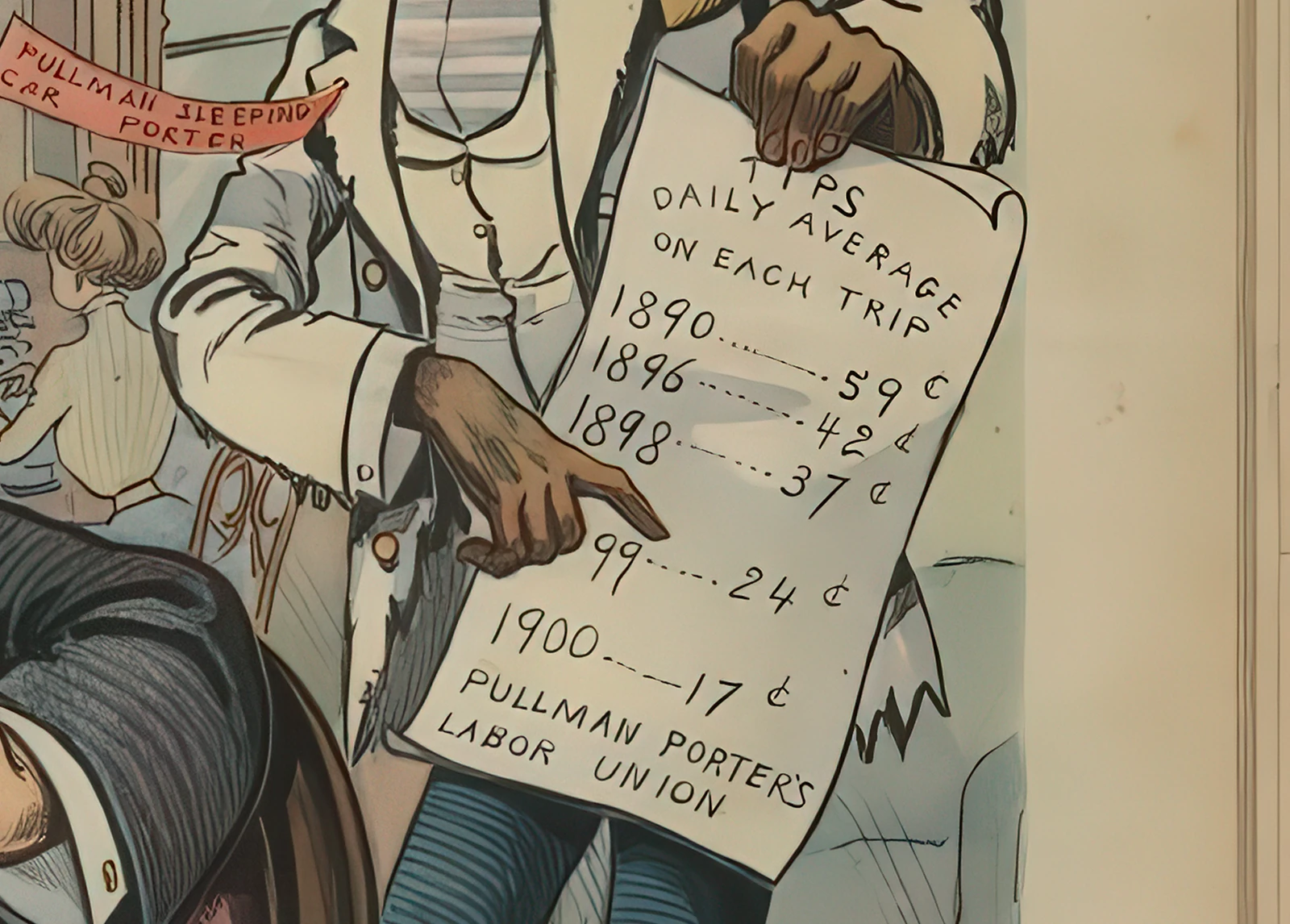
No porter can budget his home expenses on tips he has not received.
The line is still on the receipt. That is not the same as anybody having decided to pay her.
Sources
- William R. Scott, The Itching Palm: A Study of the Habit of Tipping in America (1916), full text at Project Gutenberg. Quotations from Chapters II and VI.
- Contemporary Pullman porter wage and hours reporting, including the Daily Worker (1925) and the Chicago Defender (1927), collected at Chicagology.
- Congressional Research Service, The Tip Credit Provisions of the Fair Labor Standards Act, reports R43445 and RL33348: P.L. 89-601 (1966) creating the tip credit at 50 percent, P.L. 95-151 (1977) and P.L. 101-157 (1989) moving the percentage, P.L. 104-188 (1996) fixing the cash wage at $2.13, the $5.12 maximum tip credit, and the seven states with no tip credit.
- US Department of Labor, Wage and Hour Division, history of federal minimum wage rates, for the $4.25 rate effective 1 April 1991 and the five subsequent increases through $7.25 in July 2009.
- Kerry Segrave, Tipping: An American Social History of Gratuities (2009), for the state anti-tipping laws and their repeal by 1926.
- John Gilmer Speed (1902), quoted in Segrave. Uncertainty noted: this quotation is widely reproduced from Segrave but we were unable to verify it against Speed's original publication, so it is cited here at one remove and is not load-bearing for anything above.
- Economic Policy Institute, analysis of DC Initiative 82 using QCEW data, for restaurant employment and tipped-worker poverty rates.
- Employment Policies Institute, for the opposing earnings analysis. Note the funding and note the name.